1 / 1

| Item | Details |
|---|---|
| Name | Tesamorelin |
| Type | GHRH analog (stimulates growth hormone release) |
| Strength | 20 mg lyophilized powder |
| Approved Use | HIV-associated lipodystrophy (FDA-approved) |
| Route | Subcutaneous injection (SC) |
| Item | Method |
|---|---|
| Solvent | 3 mL bacteriostatic water |
| Final Concentration | 6.67 mg/mL |
| Storage |
Lyophilized powder: refrigerate (2–8 °C) Reconstituted solution: refrigerate, use under sterile conditions |
| Week | Dose | Micrograms (mcg) | U100 Syringe Units | Injection Volume (mL) |
|---|---|---|---|---|
| Week 1 | 1 mg/day | 1000 mcg | ~15 units | 0.15 mL |
| Week 2+ | 2 mg/day | 2000 mcg | ~30 units | 0.30 mL |
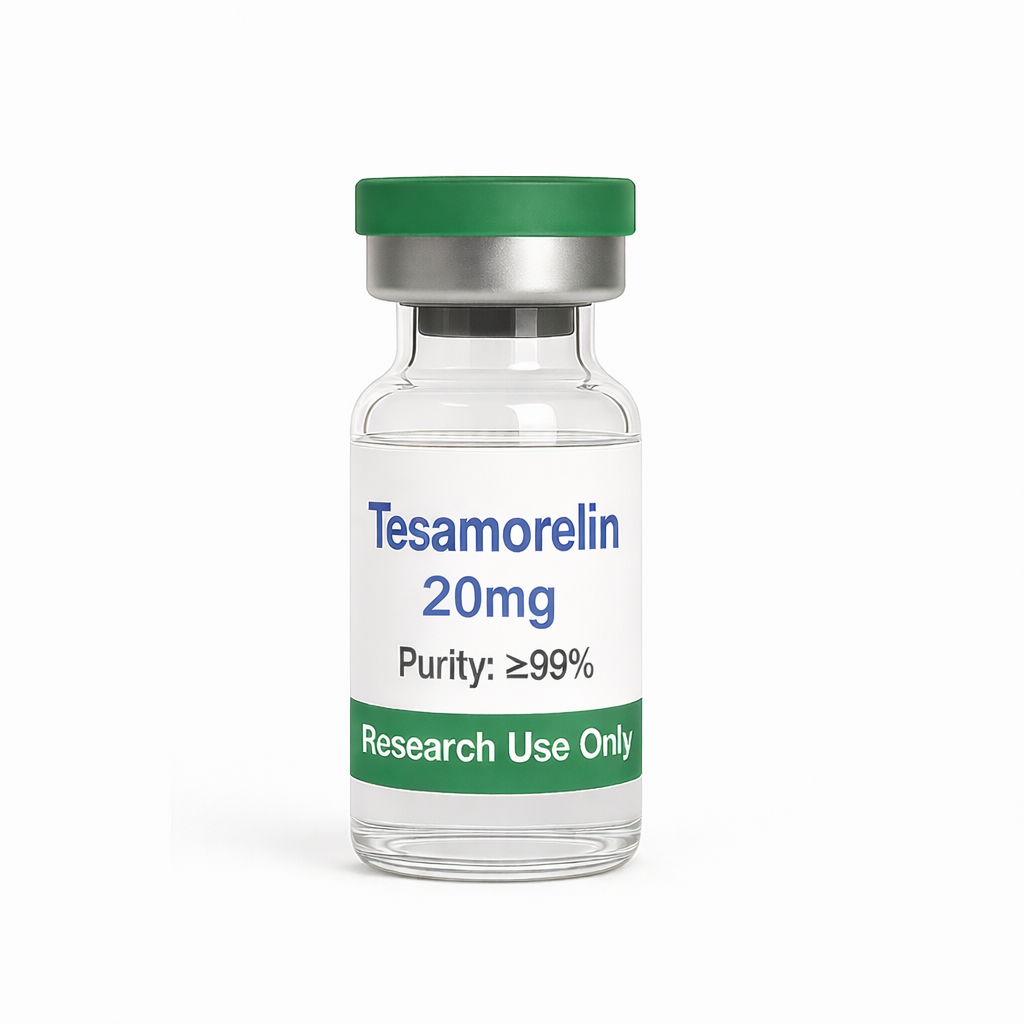
Tesamorelin is a GHRH (Growth Hormone-Releasing Hormone) analog that stimulates natural growth hormone release. It is FDA-approved for the treatment of HIV-associated lipodystrophy.
Reconstitute the 20 mg lyophilized powder using 3 mL of bacteriostatic water. This yields a final concentration of 6.67 mg/mL for subcutaneous injection.
The typical protocol starts with 1 mg/day (approx. 15 units / 0.15 mL) during Week 1 for a tolerance check, then increases to 2 mg/day (approx. 30 units / 0.30 mL) from Week 2 onward.
Tesamorelin is administered once daily via subcutaneous injection, ideally in the evening to match the body's natural growth hormone secretion rhythm.
The lyophilized powder must be refrigerated between 2–8 °C. Once reconstituted, the solution must remain refrigerated and handled strictly under sterile conditions.
Possible side effects include injection site reactions, joint pain, edema, and blood sugar fluctuations. It is important to monitor IGF-1 levels, blood glucose, and lipid profiles under medical supervision.