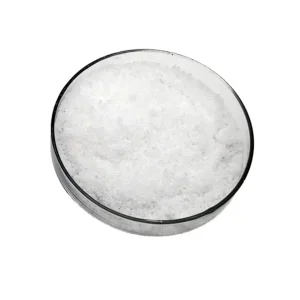
Wholesale 99% Orlistat Factories & Companies

Global Chemical Supply Chain | Technical API White Paper & Industrial Intelligence
99.2%
Average HPLC Purity Benchmark
250,000 m²
cGMP Production Infrastructure
10+
Global Tier-1 Distribution Hubs
USD/DMF
Full Regulatory Filings Ready

Global Demand & Procurement Ecosystem for 99% Orlistat API

The global demand for high-purity Orlistat API (CAS 96827-07-5) has surged dramatically due to the expanding global incidence of metabolic disorders, severe obesity, and associated cardiovascular co-morbidities. As a non-systemic, potent, long-acting, and specific pancreatic and gastric lipase inhibitor, Orlistat occupies a unique niche in pharmacological weight management frameworks. Unlike central nervous system (CNS) appetite suppressants, Orlistat exerts its therapeutic activity locally within the lumen of the stomach and small intestine.

For global pharmaceutical procurement officers, regulatory affairs specialists, and contract manufacturing organizations (CMOs), sourcing bulk Wholesale 99% Orlistat powder requires stringent scrutiny over stereochemical integrity, residual solvent profiles, and polymorphic stability. The therapeutic efficiency of finished dosage forms (FDF)—such as 60 mg OTC capsules or 120 mg prescription capsules—hinges directly on the raw material's crystal morphology and assay precision.

Non-Systemic Safety Profile
Minimal systemic absorption (<1%) drastically reduces systemic toxicity risk, requiring zero metabolic clearance by the liver or kidneys.
Targeted Lipase Inhibition
Covalently binds to the active serine site of gastric and pancreatic lipases, blocking hydrolytic digestion of dietary triglycerides.
Caloric Absorption Reduction
Inhibits approximately 30% of ingested dietary fat absorption, providing measurable weight loss and metabolic control.

Technical Roadmap: Chemical Synthesis & Polymorphic Engineering

Orlistat (tetrahydrolipstatin) features a complex chemical architecture containing four chiral centers: (2S,3S,5S)-2-hexyl-3-hydroxy-5-[(S)-2-formamido-4-methylpentanoyloxy]hexadecanoic acid lactone. Leading global factories utilize specialized biotechnological fermentation combined with stereoselective organic synthesis to achieve consistent 99.0%+ purity parameters.

1. Fermentative & Synthetic Pathways

Industrial production begins via the fermentation of Streptomyces toxytricini to generate lipstatin, the natural precursor containing two double bonds in the side chain. Subsequent catalytic hydrogenation over platinum or palladium catalysts yields tetrahydrolipstatin (Orlistat). Control of catalyst loading, temperature, and hydrogen pressure is vital to prevent incomplete hydrogenation or ring-opening degradation of the critical beta-lactone core.

2. Polymorphism and Thermal Stability

Orlistat exhibits complex crystalline polymorphism. Form I is the thermodynamically stable crystalline phase preferred for commercial formulation. Due to Orlistat's low melting point (approximately 40°C to 44°C), thermal management during micronization and milling is critical. Advanced manufacturers utilize cold-air jet milling to prevent thermal degradation and preserve the target particle size distribution (d90 < 50 µm).

Test Parameter USP / EP Specification Standard Gentolex High-Purity Grade Benchmark Analytical Methodology
Chemical Appearance White or off-white crystalline powder White crystalline powder Visual inspection
Chromatographic Purity (HPLC) ≥ 98.0% ≥ 99.2% HPLC-UV (210 nm)
Individual Impurity ≤ 0.5% ≤ 0.15% High-Performance Liquid Chromatography
Specific Optical Rotation -43.0° to -48.0° -45.5° Polarimetry (c=1 in CHCl3)
Melting Range 40.0°C – 45.0°C 42.5°C – 44.0°C Differential Scanning Calorimetry (DSC)
Heavy Metals / Residue on Ignition ≤ 10 ppm / ≤ 0.1% < 5 ppm / < 0.05% ICP-MS / Gravimetric

Global Regulatory Compliance & Quality Assurance Framework

Navigating regulatory approvals for finished drug products containing Orlistat API requires robust documentation and audit readiness. Wholesale buyers must select manufacturing partners whose infrastructure conforms fully with ICH Q7 (Good Manufacturing Practice for Active Pharmaceutical Ingredients).

  • Drug Master File (DMF) Registration: Complete Type II DMF filed with the US FDA, complemented by CEP/COS applications with EDQM in Europe.
  • Elemental Impurities & Residual Solvents: Strict monitoring in accordance with ICH Q3A, Q3C, and Q3D guidelines to ensure non-detectable levels of heavy metal catalysts (Pd, Pt) and toxic solvents.
  • Enantiomeric Purity: Chiral HPLC testing guarantees less than 0.1% of unwanted diastereomers, ensuring maximum enzyme-binding affinity and minimizing side-effect profiles.
  • Stability & Shelf Life Data: Accelerated (40°C ± 2°C / 75% RH ± 5% RH) and long-term (25°C ± 2°C / 60% RH ± 5% RH) stability testing demonstrating 36+ months shelf life in nitrogen-purged double PE lined aluminum containers.

Comprehensive Industrial & Technical Solutions

Our main services focus on supplying peptides APIs and Custom Peptides, FDF license out, Technical Support & Consultation, Product Line and Lab Setup, Sourcing & Supply Chain Solutions.

Chemicals Products
An overall factory construction area of 250,000 square meters under international standard to offer flexible, scalable and cost-effective solutions.
Pharmaceutical Ingredients
Gentolex offers an extensive range of APIs and intermediates for development study and commercial application with cGMP standard from long-term collaborations. Documents and Certificates are supported to customers worldwide.
Development & R&D
Dedicated research teams delivering custom synthesis, route optimization, impurity identification, and scaling solutions for complex molecules and peptides.
Procurement Service
For those clients who prefer to avoid the complexity of dealing with multiple points of contact, we provide extra customized procurement services with the most superior and comprehensive supply chain sources.

About Gentolex Group

Gentolex’s goal is to create opportunities connecting the world with better services and guaranteed products. Up to date, Gentolex Group has been serving customers from more than 10 countries, specially, representatives are established in Mexico and South Africa. Our main services focus on supplying peptides APIs and Custom Peptides, FDF license out, Technical Support & Consultation, Product Line and Lab Setup, Sourcing & Supply Chain Solutions.

View Corporate Details

Global Compliance Partners & Certifications

Certification Logo 1
Certification Logo 2
Certification Logo 3
Certification Logo 4
Certification Logo 5
Certification Logo 6
Certification Logo 7
Certification Logo 8
Certification Logo 9
Certification Logo 10

News & Technical Innovations

Latest breakthroughs, analytical reports, and peptide manufacturing insights from Gentolex specialists

Selank Acetate API

High-Purity Selank Acetate API | Peptide Manufacturing and Global Supply

Introduction to Selank Acetate API: Selank Acetate API is a synthetic heptapeptide active pharmaceutical ingredient (API) composed of the amino acid sequence Thr-Lys-Pro-Arg-Pro-Gly-Pro (TKPRPGP). Originally developed through neuropharmacological research...

View Details
Thymosin Beta-4 API

Thymosin Beta-4 API Manufacturer & Supplier | High Purity Tβ4 Peptide API

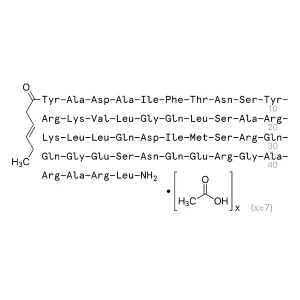
Trusted Thymosin Beta-4 API Manufacturer and Global Peptide Supplier: As a professional Thymosin Beta-4 API manufacturer and supplier, we provide high-quality Thymosin Beta-4 peptide API solutions for biotechnology companies and research institutions...

View Details
BPC-157 API Manufacturer

BPC-157 API Manufacturer | High Purity Peptide Raw Material

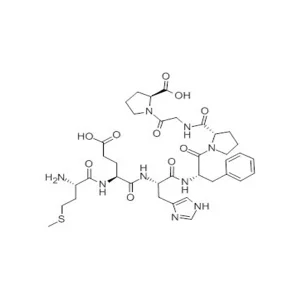
Introduction: BPC-157 API is a synthetic pentadecapeptide that has gained increasing attention in peptide research due to its potential biological activities related to tissue repair, gastrointestinal protection, and inflammatory regulation...

View Details
Semax API Supplier

Semax API Manufacturer & Supplier | High Purity Research Grade Peptide

With continuous development in neuroscience, peptide technology, and life science research, neuroactive peptides have become vital. Semax, a synthetic peptide derived from ACTH fragment, has attracted global technical attention...

View Details
SS-31 API Manufacturer

SS-31 (Elamipretide) API Manufacturer & Supplier

SS-31 API, also known as Elamipretide, MTP-131, Bendavia, is a synthetic mitochondria-targeting tetrapeptide designed to bind cardiolipin in the inner mitochondrial membrane, supporting bioenergetics...

View Details

Frequently Asked Questions (FAQ) for Orlistat Procurement & Manufacturing

Technical, analytical, and regulatory guidance for pharmaceutical formulators and chemical buyers

Q1: What is the primary analytical method used to verify the 99% purity of Orlistat API?
High-Performance Liquid Chromatography (HPLC) coupled with UV detection at 210 nm or refractive index (RI) detection is the official USP/EP standard. Because Orlistat lacks strong chromophores, reverse-phase HPLC with an isocratic or gradient organic mobile phase (typically acetonitrile/water/phosphoric acid mixtures) is used to accurately quantitate assay concentration and identify process-related impurities such as di-hydro or enantiomeric variants.
Q2: Why is control of polymorphism critical when purchasing Wholesale Orlistat in bulk?
Orlistat can crystallize into multiple polymorphic forms. Form I is the stable crystalline form required for consistent drug solubility, dissolution kinetics, and shelf-life stability. Amorphous or metastably formed structures can exhibit lower melting points, leading to sticky powder behavior during capsule filling or compaction. Leading factories use precise temperature-controlled cooling crystallization to guarantee 100% Form I content.
Q3: How does Orlistat API perform during direct encapsulation or granulation?
Due to its low melting temperature (~43°C), Orlistat is susceptible to thermal softening during high-shear granulation or rapid milling. Standard formulation protocols utilize extrusion-spheronization or low-temperature fluid-bed coating with microcrystalline cellulose (MCC), sodium starch glycolate, and polyvinylpyrrolidone (PVP) to create micro-pellets, preserving drug stability and dissolution rates.
Q4: What packaging and temperature protocols are required for international shipment?
Orlistat API is sensitive to elevated temperatures and moisture-induced hydrolytic degradation (which forms open-ring hydroxy acid impurities). It must be packaged under nitrogen purging inside heat-sealed, double PE bags contained within light-resistant aluminum foil outer bags. International transit is maintained under cold-chain or controlled room temperature (<25°C) to guarantee full chemical stability upon arrival.
Q5: Can Gentolex provide Drug Master File (DMF) documentation for regulatory submissions?
Yes. Gentolex supplies complete regulatory dossiers including USDMF, CEP, and detailed technical documentation (CoA, MSDS, Route of Synthesis, Residual Solvent Reports, BSE/TSE statements, and Process Validation protocols) to streamline product registration with global health authorities.
Q6: What is the typical MOQ for commercial Orlistat 99% API procurement?
While commercial manufacturing batches typically ship in 25 kg fiber drums with tamper-evident seals, pilot-scale quantities (1 kg to 5 kg) are readily available for analytical validation, formulation development, and clinical trial supplies.