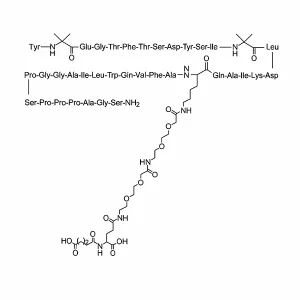
Explore our specialized catalog of active pharmaceutical ingredients, synthetic peptides, and industrial chemical intermediates engineered for compliance and performance.
A comprehensive analysis of market dynamics, bioprocess engineering, and global compliance for bulk Lovastatin API (CAS 75330-75-5) procurement.
Lovastatin (CAS Number: 75330-75-5), chemically designated as (1S,3R,7S,8S,8aR)-8-{2-[(2R,4R)-4-hydroxy-6-oxo-oxan-2-yl]ethyl}-3,7-dimethyl-1.2,3,4,6,7,8,8a-octahydronaphthalen-1-yl (2S)-2-methylbutanoate, represents a landmark therapeutic agent in lipid-lowering pharmacology. As a naturally occurring fungal metabolite derived from Aspergillus terreus fermentation, Lovastatin operates as a competitive inhibitor of 3-hydroxy-3-methylglutaryl-coenzyme A (HMG-CoA) reductase.
HMG-CoA reductase is the rate-limiting enzyme responsible for catalyzing the conversion of HMG-CoA to mevalonate in the hepatic cholesterol biosynthesis pathway. By reversibly blocking this active site, Lovastatin decreases intracellular cholesterol concentration, inducing upregulation of low-density lipoprotein (LDL) receptors on hepatocytes and subsequently accelerating clearance of circulating LDL-C from the plasma.
Cardiovascular diseases (CVDs) remain the leading cause of global mortality. As a foundational statin, bulk Lovastatin powder serves as a core active pharmaceutical ingredient in hypercholesterolemia, combined hyperlipidemia, and primary prevention of coronary heart disease. Enterprise buyers require consistent, multi-ton supply pipelines capable of supporting both immediate release and extended-release Oral Solid Dosage (OSD) formulations.
Beyond finished dosage form (FDF) production, Lovastatin acts as a vital precursor for semi-synthetic statin manufacturing, specifically the synthesis of Simvastatin. Consequently, industrial demand for high-purity, low-impurity Lovastatin substrate continues to grow across commercial pharmaceutical manufacturing centers in North America, Europe, LATAM, and Asia-Pacific.
| Parameter / Parameter Name | Specification Target | Testing Methodology | Regulatory Alignment |
|---|---|---|---|
| Chemical Name | [1S-[1α(R*),3α,7β,8β(2S*,4S*),8aβ]]-1,2,3,7,8,8a-Hexahydro-3,7-dimethyl-8-[2-(tetrahydro-4-hydroxy-6-oxo-2H-pyran-2-yl)ethyl]-1-naphthalenyl 2-methylbutanoate | IUPAC / Structure Verification | USP / Ph. Eur. Monograph |
| CAS Registry Number | 75330-75-5 | Chemical Identifier Index | Global Chemical Index |
| Assay Content (Dried Basis) | 98.5% – 101.5% | HPLC against USP Standard | cGMP / Monograph Criteria |
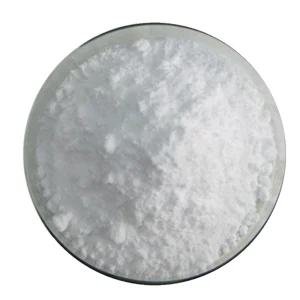
| Appearance | White to off-white crystalline powder | Visual / Colorimetry | In-House / Standard QA |
| Individual Impurities | ≤ 0.2% (Lovastatin Acid, Dihydrolovastatin) | High Performance Liquid Chromatography | ICH Q3A Impurity Limits |
| Heavy Metals / Residual Solvents | Meets ICH Q3C Guidelines (Ethanol, Methanol ≤ Class Limits) | ICP-MS / Headspace GC-FID | ICH Harmonized Standards |
| Specific Optical Rotation | +325° to +340° | Polarimetry (c=0.5 in acetonitrile) | USP <781> Compliance |
From microbial culture optimization to continuous crystallization: how high-yield Lovastatin is synthesized at enterprise scale.
Industrial Lovastatin biosynthesis utilizes genetically stabilized strains of Aspergillus terreus. Culture optimization takes place inside multi-ton deep-tank fermenters. Nutrient broth formulation, temperature regulation (28°C–30°C), micro-aeration, and pH control are strictly governed by automated Process Analytical Technology (PAT) to maximize secondary metabolite yield while minimizing unwanted side-products like Sulochrin.
Upon reaching peak metabolite concentration, the fermentation broth undergoes solid-liquid separation via continuous rotary vacuum filtration. The mycelial cake containing intracellular Lovastatin is subjected to solvent extraction using pharmaceutical-grade organic solvents (e.g., ethyl acetate or butyl acetate). Acidification converts the open-ring hydroxy acid form into the preferred closed-ring lactone structure.
The crude extract undergoes multi-stage continuous crystallization to eliminate structurally related impurities such as Dihydrolovastatin. Micronization techniques are applied to adjust particle size distribution (PSD), ensuring optimum bioavailability, rapid dissolution kinetics, and uniform flowability for high-speed tablet compression machinery.
Ensuring seamless registration and market authorization across regulated and emerging pharmaceutical markets worldwide.
Gentolex maintains fully compiled Drug Master Files (DMF) registered with the United States Food and Drug Administration (US FDA) and holds Certificates of Suitability (CEP) issued by EDQM. Our technical team provides complete access to CTD Format (Common Technical Document) Dossiers, including Module 3 quality data, process validation, residual solvent analytical reports, and stability data under ICH Q1A(R2) conditions (long-term 25°C/60% RH, accelerated 40°C/75% RH).
In accordance with global cGMP guidelines (WHO, US FDA 21 CFR Part 211, EU Annex 1), every batch of wholesale Lovastatin undergoes comprehensive Certificate of Analysis (CoA) testing. Full raw material traceability, validated clean-in-place (CIP) protocols, endotoxin control, and strict environmental air monitoring ensure that each shipment meets maximum quality assurance parameters prior to international release.
Tailored raw material solutions for diverse pharmaceutical finished product lines and synthetic pathways.
Optimized particle size distributions enable rapid wet granulation or direct compression formulations. Lovastatin API is tailored for 10mg, 20mg, and 40mg immediate-release tablets, ensuring uniform drug distribution and compliance with USP dissolution standard (>80% dissolved in 30 minutes).
For extended-release therapeutic regimens requiring prolonged systemic therapeutic concentration, our bulk powder offers tight control over crystalline morphology, preventing unwanted polymorph conversion during matrix polymer blending (e.g., HPMC matrices).
Serves as a high-purity regulatory-grade intermediate substrate for chemical conversion to Simvastatin via methylated side-chain acyl transfer. Controlled moisture content (≤0.5%) prevents unwanted ester hydrolysis during semi-synthetic chemical steps.
Our main services focus on supplying peptides APIs and Custom Peptides, FDF license out, Technical Support & Consultation, Product Line and Lab Setup, Sourcing & Supply Chain Solutions.
An overall factory construction area of 250,000 square meters under international standard to offer flexible, scalable and cost-effective solutions.
Gentolex offers an extensive range of APIs and intermediates for development study and commercial application with cGMP standard from long-term collaborations. Documents and Certificates are supported to customers worldwide.
Continuous R&D innovations, bio-fermentation strain upgrades, process analytical validation, and generic formulation development support for international partners.
For those clients who prefer to avoid the complexity of dealing with multiple points of contact, we provide extra customized procurement services with the most superior and comprehensive supply chain sources.
Gentolex’s goal is to create opportunities connecting the world with better services and guaranteed products. Up to date, Gentolex Group has been serving customers from more than 10 countries, specially, representatives are established in Mexico and South Africa.
Our main services focus on supplying peptides APIs and Custom Peptides, FDF license out, Technical Support & Consultation, Product Line and Lab Setup, Sourcing & Supply Chain Solutions.
View Details


Stay updated with the latest technological developments, peptide research insights, and API manufacturing innovations.


Technical, regulatory, and supply chain answers for pharmaceutical buyers, QA managers, and chemical procurement officers.
Discover our extended line of active pharmaceutical ingredients, therapeutic peptide raw materials, and high-purity biological compounds.