1 / 1

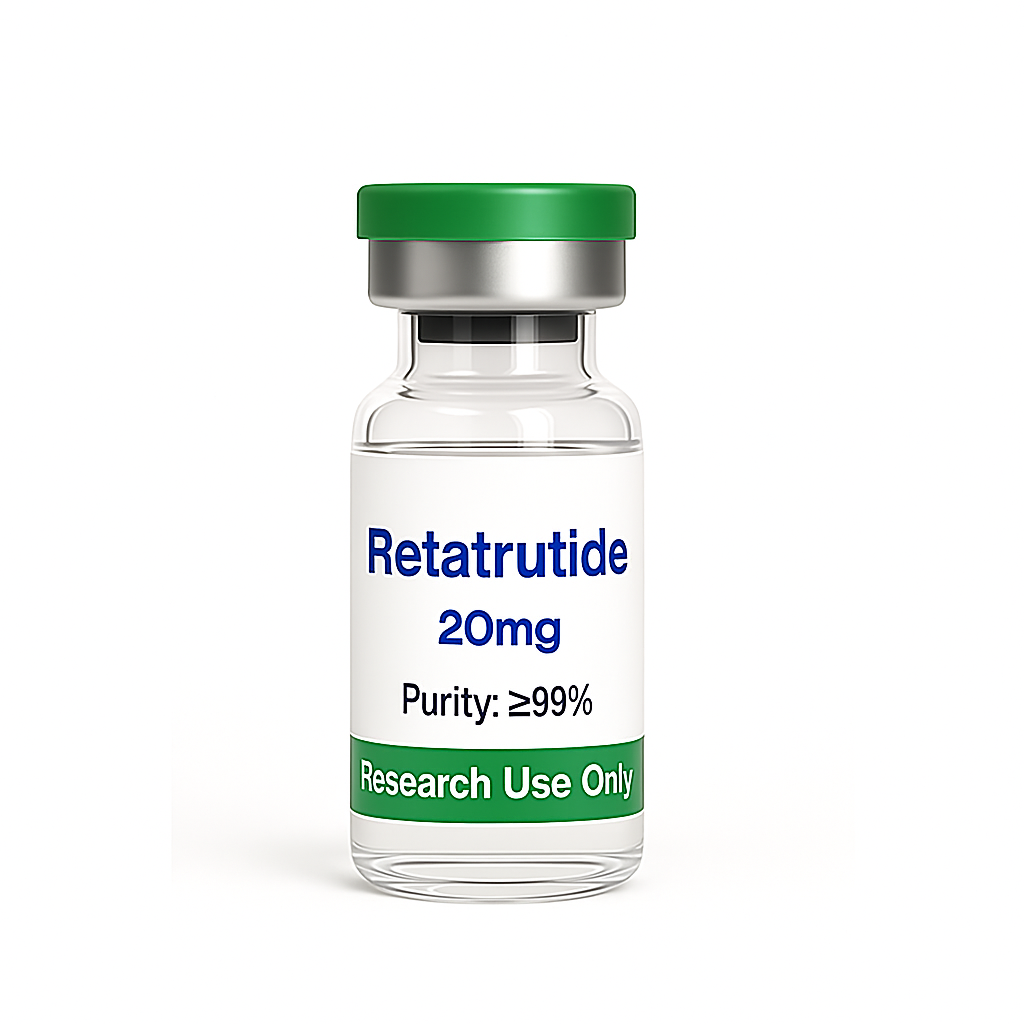
| Name | Retatrutide |
| State | Lyophilized Powder |
| Appearance | White Powder |
| Grade | Medical Grade |
| Purity | 99% |
| Size | 10mg, 20mg, 30mg, 60mg |
| Administration | Subcutaneous Injection |
| Benefits | Treating diabetes and weight loss |
Retatrutide is a novel triple agonist peptide targeting the glucagon receptor (GCGR), glucose-dependent insulinotropic polypeptide receptor (GIPR), and glucagon-like peptide-1 receptor (GLP-1R). Retatrutide activates human GCGR, GIPR, and GLP-1R with EC50 values of 5.79, 0.0643, and 0.775 nM, respectively, and mouse GCGR, GIPR, and GLP-1R with EC50 values of 2.32, 0.191, and 0.794 nM. It serves as an important research tool in the study of obesity and metabolic disorders.
Retatrutide effectively activates the GLP-1R signaling pathway and stimulates glucose-dependent insulin secretion by acting on both the GIP and GLP-1 receptors. This synthetic peptide exhibits potent hypoglycemic properties and has been developed as an anti-diabetic compound for Type 2 Diabetes (T2D). It promotes insulin release and suppresses glucagon secretion in a glucose-dependent manner.
Additionally, Retatrutide has been shown to delay gastric emptying, lower both fasting and postprandial glucose levels, reduce food intake, and induce significant body weight loss in individuals with T2D.
Retatrutide (LY3437943) is a single lipid-conjugated peptide that functions as a potent agonist of human GCGR, GIPR, and GLP-1R. Compared with native human glucagon and GLP-1, Retatrutide exhibits lower potency at GCGR and GLP-1R (0.3× and 0.4×, respectively) but demonstrates markedly enhanced potency (8.9×) at the GIPR compared with glucose-dependent insulinotropic polypeptide (GIP).
In studies involving diabetic mice with nephropathy, Retatrutide administration significantly reduced albuminuria and improved glomerular filtration rate. This protective effect is attributed to the activation of the GLP-1R/GR-dependent signaling pathway, which mediates anti-inflammatory and anti-apoptotic actions in renal tissue.
Retatrutide also directly modulates glomerular permeability, enhancing urine concentration ability. Preliminary findings suggest that, compared to conventional chronic kidney disease treatments such as ACE inhibitors and ARBs, Retatrutide produces a more pronounced reduction in albuminuria after only four weeks of treatment. Furthermore, it has demonstrated greater efficacy in reducing systolic blood pressure than ACE inhibitors or ARBs, with no significant adverse effects observed.
The most common side effects of Retatrutide are gastrointestinal in nature, including nausea, diarrhea, vomiting, and constipation. These symptoms are generally mild to moderate and tend to resolve with dose reduction. Approximately 7% of subjects also reported sensations of skin tingling. An increase in heart rate was observed at 24 weeks in higher-dose groups, which later returned to baseline levels.