1 / 1

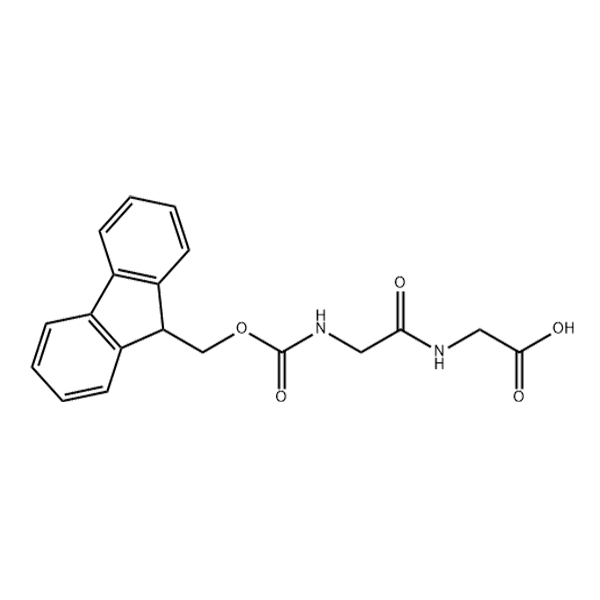
Fmoc-Gly-Gly-OH is a dipeptide used as a basic building block in solid-phase peptide synthesis (SPPS). It features two glycine residues and an Fmoc-protected N-terminus, allowing for controlled peptide chain elongation. Due to glycine’s small size and flexibility, this dipeptide is often studied in the context of peptide backbone dynamics, linker design, and structural modeling in peptides and proteins.
Fmoc-Gly-Gly-OH provides a flexible and uncharged segment within a peptide sequence. Glycine residues introduce conformational freedom, making this dipeptide ideal for linkers, turns, or unstructured regions in functional peptides. It is widely used in the design of bioactive peptides, enzyme substrates, and bioconjugates where minimal steric hindrance and flexibility are desired.
Fmoc-Gly-Gly-OH serves as a fundamental dipeptide building block in solid-phase peptide synthesis (SPPS) for controlled chain elongation.
Glycine residues provide high conformational freedom and flexibility due to their small size, while introducing minimal steric hindrance and keeping the segment uncharged.
The Fmoc protecting group safeguards the N-terminus of the dipeptide, ensuring step-by-step assembly and preventing unwanted reactions during peptide synthesis.
It is widely applied in designing bioactive peptides, enzyme substrates, bioconjugates, structural modeling, and peptide backbone dynamics research.
It allows researchers to study flexible turns and unstructured regions, aiding in the analysis of conformational dynamics within peptides and proteins.