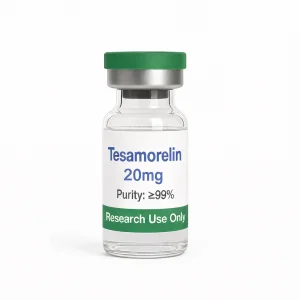
Explore our top-tier OEM manufactured peptide APIs, intermediates, and custom chemical synthesis options conforming to global regulatory standards.
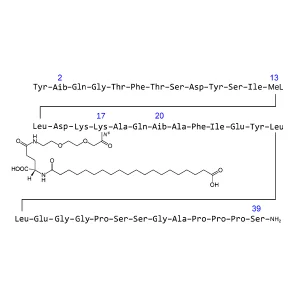
Understanding CAS 110-73-6: Structural dynamics, physical properties, and chemical reactivity in modern industrial processing.
2-(Ethylamino)ethanol (CAS Registry Number: 110-73-6), commonly referred to as N-Ethylethanolamine (EAE), is a bifunctional organic compound containing both a secondary amine group and a primary hydroxyl functional group. Its chemical formula is C4H11NO with a molecular weight of 89.14 g/mol. This unique dual-functionality renders it an extraordinarily versatile building block across organic synthesis, gas treatment engineering, pharmaceutical API formulation, and specialty performance chemistry.
As a colorless to light yellow hygroscopic liquid possessing a faint ammoniacal odor, 2-(ethylamino)ethanol is fully miscible with water, alcohol, ether, and polar organic solvents. The structural presence of the ethyl substituent on the nitrogen atom alters its basicity (pKa ~ 9.8) and steric environment compared to monoethanolamine (MEA) or diethanolamine (DEA). This structural variance translates directly into differentiated selectivity during acid gas absorption and specialized regioselectivity in organic synthesis.
IUPAC Name: 2-(Ethylamino)ethan-1-ol
CAS Number: 110-73-6 | EINECS No.: 203-797-5
Synonyms: N-Ethylethanolamine, Ethyl(2-hydroxyethyl)amine, N-Ethyl-N-(2-hydroxyethyl)amine, EAE
InChI Key: InChI=1S/C4H11NO/c1-2-5-3-4-6/h6H,2-4H2,1H3
| Property Parameter | Specification Value |
|---|---|
| Purity (GC Assay) | ≥ 99.5% (Industrial/Pharmaceutical Grade) |
| Water Content (KF) | ≤ 0.2% max |
| Density (20°C) | 0.914 g/cm³ |
| Boiling Point | 167 - 169 °C (760 mmHg) |
| Flash Point | 78 °C (Closed Cup) |
| Refractive Index (n20/D) | 1.438 - 1.440 |
| Appearance | Clear, colorless to light yellow liquid |
| Color (APHA) | ≤ 15 - 30 max |
*Note: Technical specifications are subject to customization based on contract OEM manufacturing requirements (e.g., electronic grade, pharmaceutical API intermediate grade, or industrial gas sweetening grade).*
Analysing how 2-(Ethylamino)Ethanol powers critical industrial sectors worldwide—from carbon capture to active pharmaceutical synthesis.
2-(Ethylamino)ethanol acts as a highly selective amine absorbent for removing acid gases such as hydrogen sulfide (H₂S) and carbon dioxide (CO₂) from natural gas, refinery off-gases, and industrial flue streams. Its sterically hindered structure provides superior energy efficiency during thermal solvent regeneration compared to conventional primary alkanolamines.
In drug discovery and commercial API manufacturing, N-ethylethanolamine serves as a key intermediate for synthesizing cardiovascular agents, antihistamines, central nervous system therapeutics, and peptide side-chain linkers. Its dual alkylamino-hydroxyl functionality enables precise alkylation and esterification steps.
Utilized in water-borne coating formulations, polyurethane chain extenders, and cationic surfactants. It neutralizes carboxyl moieties in acrylic resins, enhancing water solubility, emulsion stability, pigment dispersion, and anti-corrosive performance on metallic substrates.
Employed as an essential solvent auxiliary and active intermediate in modern pesticide, herbicide, and fungicide production, aiding in emulsifiable concentrate stability and improving plant systemic absorption.
Functions as a biostable alkanolamine pH buffer and corrosion inhibitor in synthetic and semi-synthetic metalworking fluids, extending fluid life cycle and preventing ferrous metal degradation during high-speed machining operations.
Integrates into advanced peptide backbone modifications and fatty acid conjugation reagents (such as Fmoc-protected derivatives), facilitating lipidated peptide stabilization and targeted drug delivery solutions.
Rigorous engineering methodologies behind high-yield, high-purity OEM manufacturing of 2-(Ethylamino)Ethanol.
Industrial production of 2-(ethylamino)ethanol primarily proceeds via the controlled reaction of monoethylamine (MEA) with ethylene oxide (EO) under optimized temperature and pressure conditions, or alternatively through the catalytic reductive amination of acetaldehyde with ethanolamine:
To prevent over-ethoxylation—which leads to side products such as 2,2'-(ethylimino)diethanol (N-ethyldiethanolethanolamine)—precise molar ratio control (excess ethylamine feed) combined with multi-stage continuous fractionating distillation columns is mandatory. Our advanced OEM facilities implement automated continuous-flow reactors integrated with real-time NIR (Near-Infrared Spectroscopy) inline analytical sensors to ensure consistent stoichiometric conversion and minimal batch-to-batch variation.
Why leading global chemical enterprises partner with Chinese contract manufacturers for raw material stability and scale advantages.
China's petro-chemical industrial parks provide direct, pipeline-integrated access to key upstream precursors like ethylene oxide and aliphatic amines. This geographic proximity dramatically reduces raw material transit costs and eliminates supply bottleneck risks during global market disruptions.
Leveraging high-capacity continuous distillation facilities allows Chinese contract manufacturers to offer highly competitive pricing structures without compromising chemical purity. OEM clients benefit from lower unit capital costs and flexible batch scaling.
Leading Chinese suppliers operate under ISO 9001, ISO 14001, and cGMP certified operational frameworks. Full REACH registration, comprehensive Safety Data Sheets (SDS), and Certificates of Analysis (CoA) are standard for seamless import clearance into Europe, North America, and LATAM.
Gentolex’s goal is to create opportunities connecting the world with better services and guaranteed chemical products. Up to date, Gentolex Group has been serving customers from more than 10 countries, with established international representative offices in Mexico and South Africa.
Our main services focus on supplying high-purity fine chemicals, peptide APIs, Custom Peptides, Finished Dosage Form (FDF) licensing, Technical Support & Consultation, Product Line and Lab Setup, as well as comprehensive Global Sourcing & Supply Chain Solutions. With an overall international standard factory construction area of 250,000 square meters, we deliver flexible, scalable, and cost-effective solutions for clients globally.


In-depth technical analysis of 2-(Ethylamino)Ethanol implementation across specialized regional manufacturing ecosystems.
In high-pressure natural gas processing plants located in the Gulf region and Gulf Coast refineries in the US, standard monoethanolamine (MEA) systems often suffer from high thermal degradation and massive energy consumption during solvent stripping. By formulating blended amine solvent packages containing 15–30 wt% 2-(ethylamino)ethanol, plant engineers achieved a 22% reduction in reboiler heat duty. The steric hindrance imparted by the ethyl group lowers the carbamate stability, allowing easier CO₂ desorption at lower temperatures while drastically mitigating equipment corrosion rates.
In pharmaceutical API manufacturing hubs across Europe and Asia, 2-(ethylamino)ethanol serves as a key reagent in constructing modified amino-alkyl side chains for therapeutic agents. Its consistent >99.5% gas chromatography purity ensures negligible formation of N-nitroso secondary amine impurities (N-nitroso-N-ethylethanolamine), fulfilling ultra-strict EMA and US FDA guidelines regarding nitrosamine impurity limits in human medicinal products.
Stay informed with scientific breakdowns, peptide research updates, and API development insights from our technical team.

Introduction to Selank Acetate API: Selank Acetate API is a synthetic heptapeptide active pharmaceutical ingredient composed of the amino acid sequence Thr-Lys-Pro-Arg-Pro-Gly-Pro (TKPRPGP). Originally developed through neuropharmacological research, Selank is a derivative of the endogenous sequence...

Trusted Thymosin Beta-4 API Manufacturer and Global Peptide Supplier: As a professional Thymosin Beta-4 API manufacturer and supplier, we provide high-quality Thymosin Beta-4 peptide API solutions for biotechnology companies and research organizations...

Introduction: BPC-157 API is a synthetic pentadecapeptide that has gained increasing attention in peptide research due to its potential biological activities related to tissue repair, gastrointestinal protection, angiogenesis, and inflammatory regulation...

With the continuous development of neuroscience, peptide technology, and life science research, neuroactive peptides have become an important area of scientific investigation. Semax, a synthetic peptide derived from an ACTH fragment...

SS-31 API, also known as Elamipretide, MTP-131, Bendavia, and SS31, is a synthetic mitochondria-targeting tetrapeptide designed to bind cardiolipin in the inner mitochondrial membrane. By stabilizing mitochondrial structure and supporting cellular bioenergetics...
Expert answers regarding 2-(Ethylamino)Ethanol specification, storage, logistics, and global procurement dynamics.
Discover our extended portfolio of fine chemicals, therapeutic peptide APIs, and synthetic accelerators.