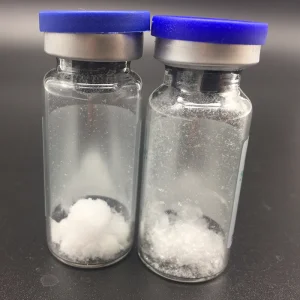
1 / 2

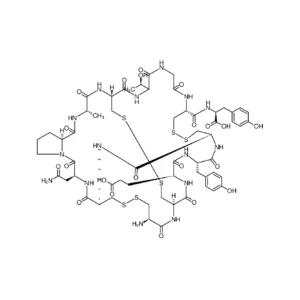
| Name | Ganirelix Acetate |
| CAS Number | 123246-29-7 |
| Molecular Formula | C80H113ClN18O13 |
| Molecular Weight | 1570.34 |
Ganirelix is a synthetic decapeptide compound, and its acetate salt, Ganirelix acetate, is a potent gonadotropin-releasing hormone (GnRH) receptor antagonist. The amino acid sequence is: Ac-D-2Nal-D-4Cpa-D-3Pal-Ser-Tyr-D-HomoArg(9,10-Et2)-Leu-L-HomoArg(9,10-Et2)-Pro-D-Ala-NH2.
Clinically, it is primarily used in women undergoing controlled ovarian stimulation programs as part of assisted reproductive technology (ART). It functions to prevent premature luteinizing hormone (LH) peaks and to effectively treat fertility disorders arising from this cause.
Demonstrates an excellent safety profile with reduced clinical adverse events.
Optimizes ART outcomes and supports higher success in pregnancy rates.
Offers significant clinical advantages and convenience over traditional options.
The pulsatile release of gonadotropin-releasing hormone (GnRH) stimulates the synthesis and secretion of Luteinizing Hormone (LH) and Follicle-Stimulating Hormone (FSH). During the mid and late follicular phases, LH pulse frequency occurs at approximately once per hour, resulting in transient rises in serum LH levels. Mid-cycle massive GnRH release triggers an LH surge, which induces key physiological responses including ovulation, oocyte meiotic resumption, and corpus luteum formation. The resulting corpus luteum increases serum progesterone while estradiol levels fall.
As a GnRH antagonist, Ganirelix acetate competitively blocks GnRH receptors on pituitary gonadotrophs and their downstream signal transduction pathways, achieving rapid and reversible inhibition of gonadotropin secretion. The inhibitory effect on pituitary LH secretion is notably stronger than on FSH. It does not induce an initial release of endogenous gonadotropins, confirming its pure antagonistic action. Complete recovery of pituitary LH and FSH levels is observed within 48 hours following discontinuation.