High-purity chemical standards, commercial-grade active pharmaceutical ingredients, and customized peptide lines.
An in-depth evaluation of global metabolic therapy demands, anti-obesity API manufacturing shifts, and strategic sourcing options for generic formulation producers.
When enterprise procurement teams and pharmaceutical formulators evaluate options to buy Orlistat 96829-58-2 from qualified factories and companies, they encounter a rapidly evolving global market. Orlistat—chemically designated as (S)-((S)-1-((2S,3S)-3-hexyl-4-oxooxetan-2-yl)tridecan-2-yl) 2-formamido-4-methylpentanoate—remains a cornerstone non-systemic potent gastric and pancreatic lipase inhibitor utilized globally for obesity management and metabolic health regimens.
Unlike systemic anti-obesity agents or GLP-1 receptor agonists that act via central nervous system pathways, Orlistat exerts its therapeutic mechanism locally within the lumen of the stomach and small intestine. By forming a covalent bond with the active serine site of gastric and pancreatic lipases, it prevents the hydrolysis of dietary triglycerides into absorbable free fatty acids and monoglycerides, decreasing fat absorption by approximately 30%.
Driven by rising global incidence rates of metabolic syndrome, type 2 diabetes co-management initiatives, and expanding over-the-counter (OTC) authorizations, commercial demand for high-grade Orlistat CAS 96829-58-2 API has shifted toward manufacturers that offer stable synthetic pathways, strict control over beta-lactone impurities, and robust DMF (Drug Master File) support.
Ensuring rigorous compliance with US FDA, EU GMP, and WHO guidelines. Standardized batch records, automated environmental monitoring, and validated cleanrooms prevent cross-contamination.
Dual-sourcing key starting materials (KSMs) like Lipstatin bio-fermentation precursor stock guarantees uninhibited bulk supply even during regional supply chain disruptions.
Ultra-pure isolation technology guarantees stereospecific control of all four chiral centers, suppressing diastereomeric impurities below stringent ICH thresholds.
Rigorous analytical benchmarking for Orlistat Raw Material CAS 96829-58-2 targeting commercial pharmaceutical batch release.
| Parameter Test | USP / EP Pharmacopeial Specification | Gentolex Typical Factory Batch Standard | Analytical Test Method |
|---|---|---|---|
| Chemical Name | (S)-((S)-1-((2S,3S)-3-hexyl-4-oxooxetan-2-yl)tridecan-2-yl) 2-formamido-4-methylpentanoate | Conforms strictly to structural ID | 1H-NMR, 13C-NMR, FT-IR, MS |
| CAS Registry Number | 96829-58-2 | 96829-58-2 | CAS Database Verified |
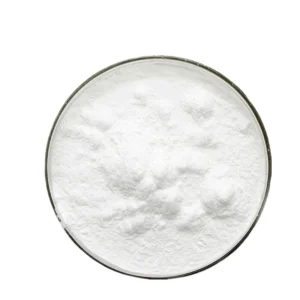
| Appearance | White to off-white crystalline powder | White fine crystalline powder | Visual Inspection |
| HPLC Assay (Dried Basis) | 98.0% – 101.5% | 99.4% – 99.8% | HPLC-UV (210 nm) |
| Specific Optical Rotation [α]D20 | -32.0° to -35.0° (c=1 in ethanol) | -33.5° to -34.2° | Polarimetry |
| Melting Point | 43.0°C to 45.0°C | 44.2°C – 44.8°C | Differential Scanning Calorimetry (DSC) |
| Related Impurities (Individual) | NMT 0.15% (Impurity A, B, C, D) | < 0.05% | High-Performance Liquid Chromatography |
| Total Impurities | NMT 1.0% | < 0.3% | HPLC Reverse-Phase Area Percent |
| Residual Solvents | Meets ICH Q3C Guidelines (Acetone, Ethyl Acetate, Hexane) | Solvents Far Below Standard Limits | Headspace Gas Chromatography (HS-GC) |
| Heavy Metals / Loss on Drying | Heavy Metals ≤ 10 ppm / LOD ≤ 0.5% | < 5 ppm / LOD < 0.2% | ICP-MS / Thermogravimetric Analysis |
Understanding the transition from microbial bio-fermentation of Lipstatin to catalytic hydrogenation and total synthesis scaling.
The predominant industrial route for high-capacity Orlistat 96829-58-2 manufacturing begins with the aerobic fermentation of Streptomyces toxytricini. This biological process generates Lipstatin, a natural precursor possessing an unsaturated diene side chain.
For specialized applications requiring non-animal, non-biological source guarantees, modern chemical factories utilize total asymmetric synthesis starting from L-leucine and fatty aldehyde building blocks.
Enabling seamless market entry for pharmaceutical enterprises via comprehensive regulatory dossiers, commercial formulation licenses, and custom supply contracts.
Complete commercial dossier packages (CTD / eCTD format) for Finished Dosage Forms (FDF) including 60mg and 120mg Orlistat hard gelatin capsules and chewable pellets.
Customized powder micronization, density tuning, and micro-pellet coating designed to optimize dissolution performance and mitigate gastrointestinal side effects in target formulations.
On-site or remote GMP audits supported by complete Batch Production Records (BPR), Certificate of Analysis (CoA), SDS, stability data (Zone IVb), and DMF access letters.
Connecting the global pharmaceutical sector with guaranteed quality products, cGMP infrastructure, and localized supply management.
Gentolex’s overarching mission is to create unprecedented opportunities by connecting global bio-pharmaceutical enterprises with reliable services and high-purity active ingredients. Up to date, Gentolex Group has been serving contract manufacturers, generic formulation partners, and research institutions in more than 10 countries, establishing dedicated international representative offices, particularly in Mexico and South Africa.
Our core competencies encompass the supply of specialized active pharmaceutical ingredients (APIs), custom peptide synthesis, FDF licensing, turnkey product line setup, lab design consultation, and tailored global procurement & supply chain strategies.


Explore recent publications, API analytical developments, and high-purity peptide technology breakthroughs from our laboratory team.

Introduction to Selank Acetate API: Synthetic heptapeptide sequence Thr-Lys-Pro-Arg-Pro-Gly-Pro (TKPRPGP). Designed for neuropharmacological research and advanced formulation integration...
Read Technical Paper →
Providing high-grade Thymosin Beta-4 API solutions for global biotechnology institutions, regenerative medicine laboratories, and therapeutic research projects...
Read Technical Paper →
BPC-157 API is a synthetic pentadecapeptide investigated for tissue protection, gastrointestinal lining recovery, angiogenesis, and anti-inflammatory cellular pathways...
Read Technical Paper →
Investigating ACTH fragment derived synthetic heptapeptide Semax. Evaluation of purity assays, LC-MS identity validation, and temperature-controlled global shipping protocols...
Read Technical Paper →
SS-31 API (Elamipretide, MTP-131, Bendavia) targets inner mitochondrial cardiolipin to preserve cellular bioenergetics and mitigate oxidative bio-stress factors...
Read Technical Paper →Clear answers to technical, regulatory, storage, and commercial purchasing queries raised by QA and Sourcing Directors.
Browse our expanded portfolio of custom synthetic peptides, metabolic API lines, and specialty fine chemicals.