
Explore our precision-manufactured chemical compounds, active pharmaceutical ingredients (APIs), and custom peptide synthons produced under strict quality control standards.
High-purity API supplier for ED treatment formulations and vascular research applications.
View Product Details
Industrial grade solution for air humidity regulators, absorption chillers, and organic synthesis.
View Product Details
Specialized peptide side-chain intermediate for long-acting therapeutic peptide synthesis.
View Product Details
High-purity peptide research compound targeting GLP-1/GIP/Glucagon receptors.
View Product Details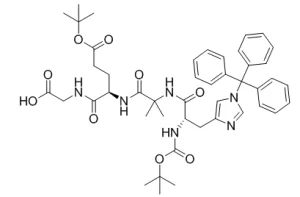
Protected tetrapeptide fragment for advanced peptide therapeutic scale-up.
View Product Details
GMP-compliant API intermediate for selective PDE5 inhibitor manufacturing.
View Product Details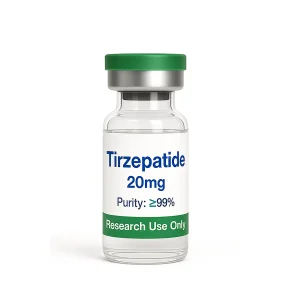
Ultra-pure metabolic research peptide with validated analytical verification.
View Product Details
Crucial building block for solid-phase peptide synthesis (SPPS) of lipopeptides.
View Product DetailsIn the rapidly evolving landscape of bio-organic synthesis, targeted medicinal chemistry, and cellular bioenergetics, 2-(2-(4-Methylthiazol-5-yl)ethoxy)-2-oxoethyl)triphenylphosphonium bromide stands out as a high-value, multifunctional organophosphonium salt. Designed to function as both a versatile synthetic intermediate and a powerful vehicle for targeted intracellular delivery, this specialized chemical compound incorporates three key structural domains: a lipophilic triphenylphosphonium ($TPP^+$) cation moiety, an ester cleavable linkage, and a substituted thiazole derivative headgroup.
The unique physical and chemical characteristics of 2-(2-(4-methylthiazol-5-yl)ethoxy)-2-oxoethyl)triphenylphosphonium bromide stem directly from its hybridized molecular skeleton. The positive charge delocalized over the hydrophobic triphenylphosphonium core enables efficient membrane permeability across hydrophobic lipid bilayers. Concurrently, the 4-methylthiazol-5-yl ethoxy structural unit introduces heterocyclic stability, sulfur/nitrogen donor potential, and bio-relevant metabolic traits.
| Chemical Attribute | Specification / Parameter Standard | Analytical Method Validation |
|---|---|---|
| Chemical Name | 2-(2-(4-Methylthiazol-5-yl)ethoxy)-2-oxoethyl)triphenylphosphonium bromide | IUPAC Nomenclature Compliance |
| Target Molecular Formula | C₂₇H₂₇NO₂PS⁺ · Br⁻ | High-Resolution Mass Spectrometry (HRMS) |
| Appearance | Off-white to light yellowish crystalline powder | Visual / Colorimetric Inspection |
| Purity Level (HPLC) | ≥ 98.0% (Commercial Bulk Grade) / ≥ 99.0% (Analytical Grade) | Reverse-Phase HPLC (C18 Column, UV 254nm) |
| Proton Identity (¹H-NMR) | Conforms to reference spectrum (Triplet @ thiazole ethoxy, singlet @ P-CH₂) | 400 MHz / 600 MHz NMR in CDCl₃ / DMSO-d6 |
| Phosphorus Content (³¹P-NMR) | Singlet peak corresponding to quaternary phosphonium species | ³¹P NMR Spectroscopy |
| Moisture Content (Karl Fischer) | ≤ 0.5% w/w | Volumetric Karl Fischer Titration |
| Heavy Metal Residues | ≤ 10 ppm total heavy metals | ICP-MS Inductively Coupled Plasma Mass Spec |
One of the primary drivers of demand for OEM 2-(2-(4-methylthiazol-5-yl)ethoxy)-2-oxoethyl)triphenylphosphonium bromide in advanced chemical biology is its capability to drive targeted accumulation inside mitochondria. Mitochondria maintain a substantial plasma membrane potential ($\Delta\Psi_m \approx -140 \text{ to } -180 \text{ mV}$, negative inside). Delocalized lipophilic cations (DLCs) such as triphenylphosphonium salts exploit this gradient to cross the hydrophobic core of the inner mitochondrial membrane (IMM), driven electrostatically to concentrate up to 1,000-fold within the mitochondrial matrix.
By anchoring functional moieties (such as the thiazole ring system) to the phosphonium cation via an ester linkage, researchers can selectively deliver metabolic regulators, redox active molecules, or fluorescent probes directly to mitochondrial oxidative phosphorylation sites.
Beyond cellular applications, the active methylene group adjacently positioned between the carbonyl ester and the phosphonium center makes this compound an ideal precursor for generating reactive phosphonium ylides. These facilitate stereoselective Wittig olefination reactions for synthetic drug discovery.
The internal ester linkage (2-oxoethyl portion) provides a bio-cleavable junction. Intracellular esterases inside matrix compartments can hydrolyze the compound, releasing active bioactive fractions while releasing non-toxic phosphonium metabolic fragments.
When sourcing 2-(2-(4-methylthiazol-5-yl)ethoxy)-2-oxoethyl)triphenylphosphonium bromide, batch moisture levels and residual halide impurities must be strictly monitored. High moisture triggers premature hydrolysis of the ester linkage during prolonged storage. Gentolex's custom crystallization process ensures moisture content is capped below 0.5%, guaranteeing 24-month chemical stability under nitrogen blanketing.
China’s advanced chemical industrial clusters offer unprecedented economies of scale, raw material integration, and rigorous quality control infrastructure for global pharmaceutical manufacturers and research institutions.
Our direct integration with primary precursors (triphenylphosphine, 4-methylthiazole derivatives, bromoacetyl halides) mitigates supply chain bottlenecks, ensuring steady production schedules even during global chemical market fluctuations.
From gram-scale pilot batches for initial discovery R&D to multi-ton bulk production runs for industrial synthesis, Gentolex delivers seamless tech transfers, optimized yield pathways, and customized particle size micronization.
Every commercial lot comes accompanied by standard Certificate of Analysis (CoA), High-Resolution ¹H/³¹P NMR, HPLC purity traces, LC-MS spectra, and SDS documentation adhering to GHS standards.
Navigating cross-border chemical procurement requires strict compliance with international chemical safety standards, import-export customs controls, and regional environmental regulations.
We provide complete regulatory filings and REACH registration guidance for European Union importers, alongside TSCA clearance compliance for North American biotechnology firms.
Gentolex has established direct representative infrastructure and regional logistical channels in Mexico and South Africa, enabling simplified import procedures and localized technical support.
Our logistics packaging meets IATA and IMDG dangerous goods compliance, utilizing moisture-proof aluminum foil vacuum sealing, inert gas flushing, and climate-controlled cold chain options.
Gentolex’s goal is to create opportunities connecting the world with better services and guaranteed products. Up to date, Gentolex Group has been serving customers from more than 10 countries, specially, representatives are established in Mexico and South Africa. Our main services focus on supplying peptides APIs and Custom Peptides, FDF license out, Technical Support & Consultation, Product Line and Lab Setup, Sourcing & Supply Chain Solutions.
An overall factory construction area of 250,000 square meters under international standard to offer flexible, scalable and cost-effective solutions for specialty chemicals and phosphonium intermediates.
Gentolex offers an extensive range of APIs and intermediates for development study and commercial application with cGMP standard from long-term collaborations. Documents and Certificates are supported to customers worldwide.
For those clients who prefer to avoid the complexity of dealing with multiple points of contact, we provide extra customized procurement services with the most superior and comprehensive supply chain sources.


Selank Acetate API is a synthetic heptapeptide active pharmaceutical ingredient composed of the amino acid sequence Thr-Lys-Pro-Arg-Pro-Gly-Pro (TKPRPGP)...
Read Technical Article
As a professional Thymosin Beta-4 API manufacturer and supplier, we provide high-quality Thymosin Beta-4 peptide API solutions for biotechnology companies...
Read Technical Article
BPC-157 API is a synthetic pentadecapeptide that has gained increasing attention in peptide research due to its potential biological activities related to tissue repair...
Read Technical Article
With the continuous development of neuroscience, peptide technology, and life science research, neuroactive peptides have become an important area of investigation...
Read Technical Article
SS-31 API, also known as Elamipretide, MTP-131, Bendavia, and SS31, is a synthetic mitochondria-targeting tetrapeptide designed to bind cardiolipin in the inner membrane...
Read Technical ArticleDiscover our extended line of specialty compounds, hydrophobic carrier salts, and metabolic peptides available for global supply.
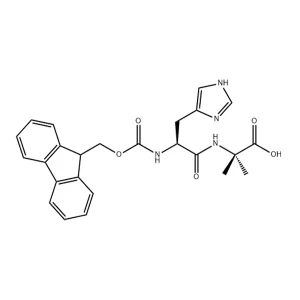
High purity protected dipeptide synthon for specialized automated peptide synthesis.
View Product Details
Type 2 diabetes & metabolic study active compound with verified analytical profile.
View Product Details
Echinocandin antifungal API derivative for pharmaceutical formulation development.
View Product Details
Ultra-pure white lyophilized peptide powder manufactured under controlled cGMP conditions.
View Product Details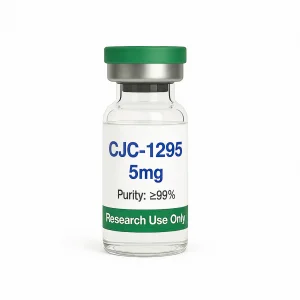
High stability growth factor analog peptide for research laboratory applications.
View Product Details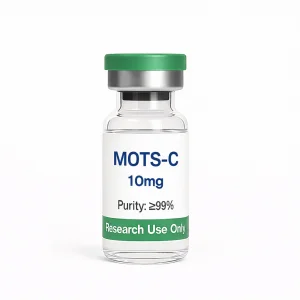
Mitochondrial-derived peptide (MDP) supporting cellular bioenergetics study.
View Product Details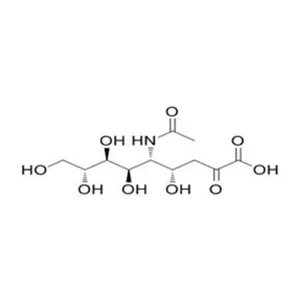
Sialic acid derivative for bio-nutritional and biochemical derivative synthesis.
View Product Details
CAS 112-03-8 quaternary ammonium surfactant for specialized industrial applications.
View Product Details