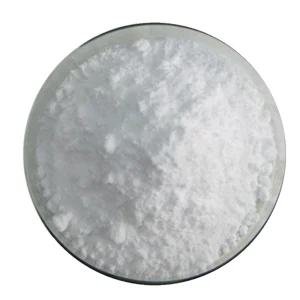

China Desmopressin Acetate to Treat central Diabetes Insipidus Exporters, Products

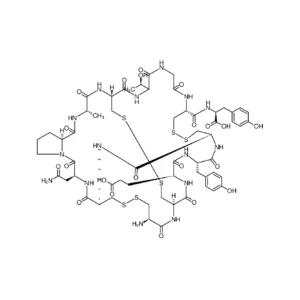
Name: Desmopressin CAS number: 16679-58-6 Molecular formula: C46H64N14O12S2 Molecular weight: 1069.22 EINECS Number: 240-726-7 Specific rotation: D25 +85.5 ± 2° (calculated for the free peptide) Density: 1.56±0.1 g/cm3(Predicted) RTECS No.: YW9000000

Product Description

Chemical Specifications

Name Desmopressin
CAS number 16679-58-6
Molecular formula C46H64N14O12S2
Molecular weight 1069.22
EINECS Number 240-726-7
Specific rotation D25 +85.5 ± 2° (calculated for the free peptide)
Density 1.56±0.1 g/cm3(Predicted)
RTECS No. YW9000000
Storage conditions Store at 0°C
Solubility H2O:soluble20mg/mL, clear, colorless
Acidity coefficient (pKa) 9.90±0.15 (Predicted)

Synonyms & Chemical Identifiers

MPR-TYR-PHE-GLN-ASN-CYS-PRO-D-ARG-GLY-NH2; MINIRIN; [DEAMINO1, DARG8] VASOPRESSIN; [DEAMINO-CYS1, D-ARG8]-VASOPRESSIN; DDAVP, HUMAN; DESMOPRESSIN; DESMOPRESSIN, HUMAN; DESAMINO-[D-ARG8] VASOPRESSIN

Applications & Medical Indications

1

Treatment of central diabetes insipidus. After the drug can reduce urinary excretion, reduce urinary frequency and reduce nocturia.

2

Treatment of nocturnal enuresis (patients aged 5 years or older).

3

Test the renal urine concentration function, and carry out the differential diagnosis of renal function.

4

For hemophilia and other bleeding diseases, this product can shorten the bleeding time and prevent bleeding. It can reduce the amount of intraoperative blood loss and postoperative oozing; especially in conjunction with reasonably controlled blood pressure during surgery, it can reduce intraoperative bleeding from different mechanisms, and reduce postoperative oozing, which can play a better role in blood protection.
Clinical Background: Diabetes Insipidus

Diabetes insipidus is primarily a disorder of water metabolism characterized by excess urine output, polydipsia, hypoosmolarity, and hypernatremia. Partial or complete deficiency of vasopressin (central diabetes insipidus), or renal insufficiency of vasopressin (nephrogenic diabetes insipidus) can be onset. Clinically, diabetes insipidus is similar to primary polydipsia, a condition in which excessive fluid intake is caused by a malfunction of the regulatory mechanism or abnormal thirst. Contrary to primary polydipsia, the increase in water intake in patients with diabetes insipidus is a corresponding response to changes in osmotic pressure or blood volume.

Frequently Asked Questions (FAQ)

Q: What are the primary indications for Desmopressin?
Desmopressin is mainly indicated for the treatment of central diabetes insipidus, nocturnal enuresis in patients aged 5 years or older, testing renal urine concentration function, and managing bleeding in conditions like hemophilia.
Q: What is the CAS number and molecular weight of Desmopressin?
The CAS number for Desmopressin is 16679-58-6, and its molecular weight is 1069.22 g/mol with the chemical formula C46H64N14O12S2.
Q: How should Desmopressin be stored?
Desmopressin should be stored at 0°C under appropriate cold storage conditions to maintain its chemical stability.
Q: How does Desmopressin assist in surgical procedures?
In surgical contexts, Desmopressin helps shorten bleeding time, reduce intraoperative blood loss, and minimize postoperative oozing, contributing to enhanced blood protection.
Q: What is the difference between Central Diabetes Insipidus and Primary Polydipsia?
Central diabetes insipidus involves a deficiency in vasopressin leading to water loss, whereas primary polydipsia stems from a malfunction in the thirst regulatory mechanism leading to excessive fluid intake.

Related Products