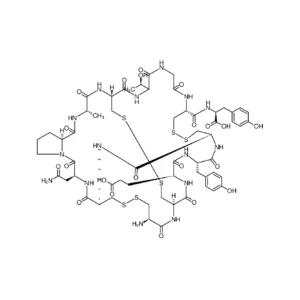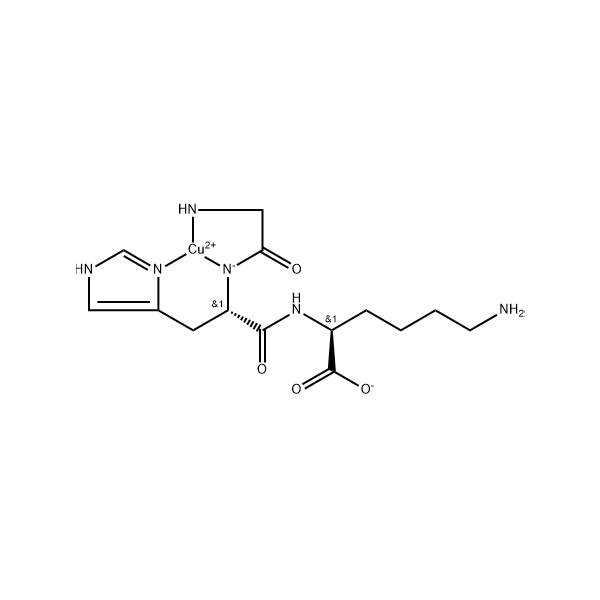

Chemical Name: Glycyl-L-Histidyl-L-Lysine Copper(II)
Molecular Formula: C₁₄H₂₄N₆O₄Cu
Molecular Weight: 340.1 g/mol
CAS Number: 49557-75-7
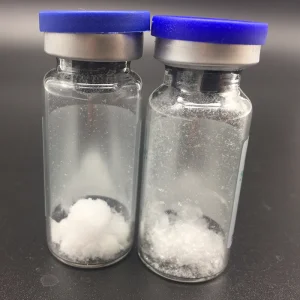
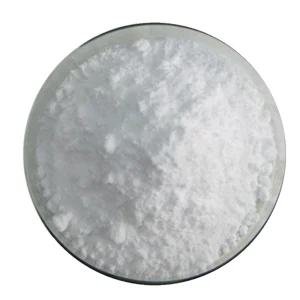
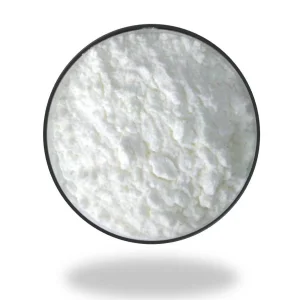
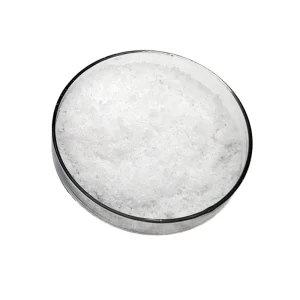
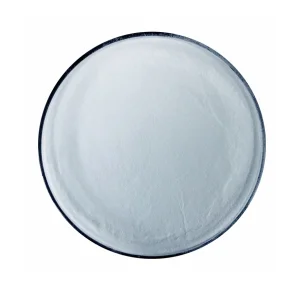
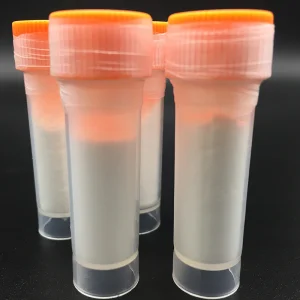
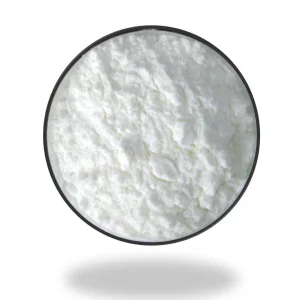
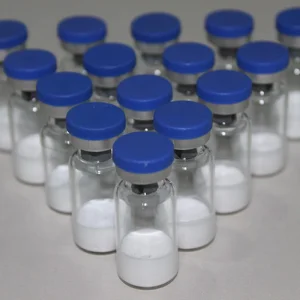
Appearance: Light brown to reddish-brown powder or lyophilized powder
Product Overview
GHK-Cu is a naturally occurring tripeptide (Gly-His-Lys) bound to copper. It is widely studied for its wound healing, anti-inflammatory, tissue remodeling, and anti-aging properties. GHK-Cu has been shown to promote collagen production, stimulate tissue regeneration, and support skin and hair health in preclinical research.
Applications
In vitro and animal research studies
Wound healing and tissue regeneration research
Skin and hair aging studies
Anti-inflammatory and cosmetic research
For research use only. Not approved for human or clinical use.
Specifications
Parameter
Specification
Purity
≥95–98%
Physical Form
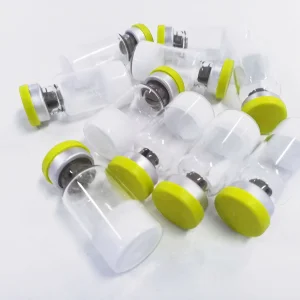
Lyophilized powder / fine powder
Solubility
Soluble in water or saline
Storage
Short-term: 2–8°C; Long-term: −20°C, protect from light and moisture
Precautions
Store in a cool, dry, dark environment
Handle with care; verify purity before use
Only intended for research purposes
Frequently Asked Questions (FAQ)
What is GHK-Cu API?
GHK-Cu (Glycyl-L-Histidyl-L-Lysine Copper(II)) is a naturally occurring tripeptide complexed with copper. It is widely used in preclinical scientific research for tissue remodeling, anti-inflammatory, and anti-aging studies.
What is the purity level and form of this GHK-Cu product?
The product has a purity specification of ≥95–98% and comes in the form of a light brown to reddish-brown fine or lyophilized powder.
What are the recommended storage conditions for GHK-Cu?
For short-term storage, keep at 2–8°C. For long-term storage, store at −20°C in a cool, dry, dark environment, protected from light and moisture.
What is the solubility of GHK-Cu powder?
GHK-Cu powder is readily soluble in water or saline solutions.
Can GHK-Cu be used for clinical or human applications?
No. GHK-Cu is intended strictly for research purposes, including in vitro, animal, cosmetic, and anti-aging research. It is not approved for human or clinical use.