1 / 1

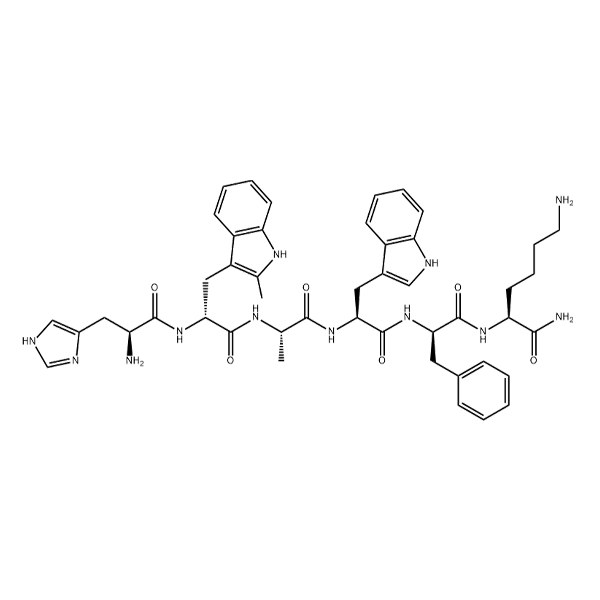
Hexarelin is a synthetic growth hormone secretagogue peptide (GHS) and potent GHSR-1a agonist, developed to stimulate endogenous growth hormone (GH) release. It belongs to the ghrelin mimetic family and is composed of six amino acids (a hexapeptide), offering enhanced metabolic stability and stronger GH-releasing effects compared to earlier analogs like GHRP-6.
Hexarelin is widely studied for its applications in endocrinology, muscle wasting, cardiac repair, and anti-aging therapies, due to its ability to naturally elevate GH and insulin-like growth factor 1 (IGF-1) levels without directly introducing external hormones.
Hexarelin binds to the growth hormone secretagogue receptor (GHSR-1a) on the pituitary and hypothalamus, mimicking the action of ghrelin—the body’s natural hunger and GH-releasing hormone.
Key physiological actions:
Unlike some other GHS peptides, Hexarelin does not significantly increase cortisol or prolactin, offering a cleaner endocrine profile.
Hexarelin is a synthetic growth hormone secretagogue peptide (GHS) and potent GHSR-1a agonist composed of six amino acids. It is designed to stimulate endogenous growth hormone release with higher metabolic stability compared to earlier analogs.
Hexarelin works by binding to the GHSR-1a receptor located on the pituitary and hypothalamus, mimicking natural ghrelin to trigger pulsatile growth hormone release and increase circulating IGF-1 levels.
Hexarelin is widely researched in muscle wasting conditions (sarcopenia, cachexia), cardiovascular protection (heart failure and post-myocardial injury), fat metabolism, and anti-aging therapies.
No, unlike some other GHS peptides, Hexarelin does not significantly elevate cortisol or prolactin levels, making it a clean candidate for endocrine studies.
Hexarelin API is produced via solid-phase peptide synthesis (SPPS) under GMP-like standards, achieving a high purity grade of ≥ 99% with low endotoxin and solvent residue levels.